
Western Australia’s Department of Health has issued an urgent measles alert after multiple potential exposure sites were identified across the state. The alert, released on 22 September 2025 by Dr Paul Armstrong, Director of the Communicable Disease Control Directorate, highlights the growing risk of measles transmission in both metropolitan and regional areas.
The warning comes as several countries report widespread measles outbreaks, raising the risk of imported cases. Local authorities are urging people who visited listed exposure sites to closely monitor their health for symptoms over the coming weeks.
Why the Alert Was Issued
Measles remains one of the most infectious viral illnesses known. Transmission occurs through airborne droplets, which can linger in the air for up to 30 minutes after an infected person has left a room. Because of this, even brief contact in places such as pharmacies, airports, and shopping centres can result in infection.
According to WA Health, people typically develop symptoms about 10 days after exposure, but the incubation period can range from 7 to 18 days. Vaccinated individuals and those born before 1966 are generally considered immune, though rare cases of mild illness have been recorded in vaccinated people.
Confirmed Exposure Locations
Health authorities have published a detailed list of times and places where individuals with measles were present. People who visited these areas during the specified windows should be alert for symptoms:
- 14 September 2025: Midland Gate Shopping Centre, Subway Midland, Chemist Warehouse Midland, and Woolworths Newman.
- 13 September 2025: Amcal+ Express Pharmacy Burswood, Victoria Park Central (including Woolworths), and Snap Fitness Newman.
- 12 September 2025: Anytime Deli Burswood, Perth Airport Terminal 1, and Amcal+ Express Pharmacy Burswood.
- 11 September 2025: Perth Airport transfer buses, Just Pharmacy Morley, and Qantas Flight QF2919 from Christmas Creek Mine.
- Earlier dates (30 August – 8 September): Multiple locations including Rockpool Bar and Grill Crown Perth, Dan Murphy’s Butler, Coles Brighton, Woolworths Clarkson, Carine Glades Shopping Centre, BP Jindalee, Aldi Butler, and Stargate Shopping Centre Baldivis.
Health authorities stress there is no ongoing risk at these sites outside of the listed dates and times.
Who Is Most at Risk?
Anyone born after 1965 who has not received two doses of a measles-containing vaccine is considered susceptible. This includes unvaccinated children, adults who never completed their vaccination schedule, and new arrivals from countries where immunisation coverage is low.
Groups at highest risk of serious illness include:
- Young children
- Pregnant women
- Immunocompromised individuals
Complications such as pneumonia and encephalitis can develop, sometimes requiring hospitalisation.
Recognising Symptoms
The early symptoms of measles are often mistaken for a common cold or flu, making vigilance essential:
- Fever and tiredness
- Runny nose and cough
- Red, sore eyes
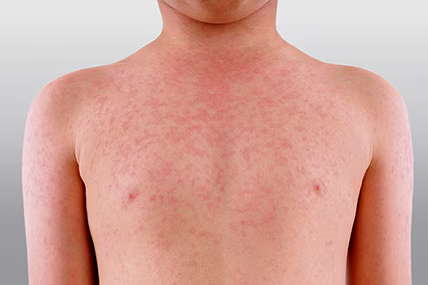
- Rash (appearing 3–4 days later, starting on the face before spreading to the body)
People are infectious from one day before symptoms begin until four days after the rash appears. This long infectious period contributes to measles’ rapid spread in unvaccinated populations.
What the Public Should Do
The Department of Health has issued clear advice for anyone who may have been exposed:
- Monitor for symptoms between 7 and 18 days after potential exposure.
- If symptoms appear:
- Isolate immediately and wear a mask.
- Phone ahead before visiting a GP or hospital to avoid exposing others.
- Seek testing for measles at an appropriate facility.
- Check vaccination records. Anyone unsure about their measles immunity should confirm with their GP or immunisation provider.
Free MMR (measles, mumps, rubella) vaccines are available in Western Australia for those at risk, even for people not eligible for Medicare.
Recommendations for Travellers
International travel continues to pose a significant risk. Countries across Asia, Africa, and parts of Europe are experiencing outbreaks, and unvaccinated Australians may bring the virus home.
Health officials recommend:
- Adults and children over 12 months should receive the MMR vaccine before overseas travel.
- Infants as young as six months can be given an early dose before travel to outbreak regions, but must still receive their routine doses at 12 and 18 months under the National Immunisation Program.
Guidance for Health Professionals
The Department has issued a parallel alert to doctors, pharmacists, and hospital staff:
- Always consider measles in patients presenting with fever and rash, especially returned travellers.
- Isolate suspected cases immediately and provide a mask at triage.
- Rooms used for assessment should remain vacant for at least 30 minutes after the consultation.
- Laboratory testing should include throat or nasopharyngeal swabs and urine PCR tests, along with serology for immunity.
- Notify suspected cases promptly to the Public Health Unit.
Healthcare providers are urged to verify that staff are protected, given the high risk of transmission in clinical settings.
The Bigger Picture: Why Vaccination Matters
Australia declared measles eliminated in 2014, but outbreaks in neighbouring regions mean imported cases remain a constant threat. The latest alert underscores how quickly one imported infection can generate multiple exposure events across both urban and regional WA.
High vaccination coverage is the only barrier preventing measles from re-establishing itself in Australia. Two doses of the MMR vaccine provide long-lasting protection in more than 99% of people. Public health experts warn that declining vaccine uptake could reverse decades of progress.
Where to Get Help
- General public: Call healthdirect 1800 022 222 after hours if concerned about symptoms.
- Vaccination services: Free MMR vaccine is available at GPs, community clinics, and pharmacies.
- Travel advice: Visit smartraveller.gov.au for up-to-date information on measles outbreaks overseas.
Final Takeaway
This measles alert is a reminder that the virus, though once common, remains a serious global health threat. For Western Australians, the message is clear: check your vaccination history, protect vulnerable family members, and act quickly if symptoms develop.
By staying alert and maintaining high vaccine coverage, the community can prevent isolated cases from turning into dangerous outbreaks. Public health officials stress that with collective vigilance, measles can remain controlled in WA—despite global challenges.